DOD

Effect of meniscal release on rate of subsequent meniscal tears and owner-assessed outcome in dogs with cruciate disease treated with tibial plateau leveling osteotomy.

Summary:

To determine and compare rates of meniscal tears after tibial plateau leveling osteotomy (TPLO) among 3 groups of dogsbased on treatment method: arthrotomy with meniscal release (openR), arthrotomy without meniscal release (openNR), arthroscopy without meniscal release (scopeNR), and compare long term owner-assessed outcomes for the same groups.

Conclusion:

Meniscal release did not reduce the rate of subsequent meniscal tears when compared with cases treatedarthroscopically or when compared with all cases combined, but may be advantageous when meniscal pathology cannot be comprehensively assessed in the cranial cruciate deficient stifle. Meniscal release had no effects on owner-assessed outcome as determined in this study.

Author & Journal:Thieman K M, et al, Vet Surg. 2006 Dec;35(8):705-10

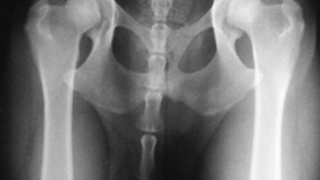
Canine hip dysplasia treated by juvenile pubic symphysiodesis. Part I: two year results of computed tomography and distraction index.

Summary:

To measure one and two year effects of juvenile pubic symphysiodesis (JPS) in puppies defined as ‘at-risk’ for canine hip dysplasia (CHD) using the following objective hip conformation criteria: Acetabular angle (AA), dorsal acetabular rim angle (DARA) and hip laxity (PennHIP© distraction index (DI).

Conclusion:

Juvenile pubic symphysiodesis surgery at 12-24 weeks of age significantly improved hip conformation and decreased laxity in at-risk CHD dogs. Early-age (12 to 16 week) recognition of hip laxity offered greater JPS benefits than surgery performed at 19- to 24-weeks-old. Dogs with severe laxity (DI≥0.70) continued to increase in osteoarthritis. An early (12-16 weeks) positive laxity test (Ortolani) should alert one to obtain objective laxity determinations (PennHIP© DI).

Author & Journal:Dueland RT, et al, VCOT 2010

Tibial plateau leveling osteotomy for repair of cranial cruciate ligament rupture in the canine

Summary:

A new technique for correcting the cranial cruciate deficient stifle, the tibial plateau leveling osteotomy, is introduced by the author.

Conclusion:

The technique is described and illustrated. Clinical results of 394 cases are described.

Author & Journal:Slocum B, Slocum T., 1. Vet Clin N Am-Small 23:777–95, 1993

Assessment of the effects of diet and physical rehabilitation on radiographic findings and markers of synovial inflammation in dogs following tibial plateau leveling osteotomy

Summary:

To determine the effects of an omega-3 fatty acid and protein-enriched diet, physical rehabilitation, or both on radiographicfindings and markers of synovial inflammation in dogs following tibial plateau leveling osteotomy and arthroscopic surgery for treatment of cranial cruciate ligament disease. DESIGN Randomized, prospective clinical trial. ANIMALS 48 dogs with unilateral cranial cruciate ligament disease.

Conclusion:

Results suggested that feeding the TF can result in lower synovial fluid PGE2 concentrations and that both the TF and rehabilitation can reduce progression of osteoarthritis in the 6 months following tibial plateau leveling osteotomy; clinical relevance of slower osteotomy healing in dogs fed the TF was unclear.

Author & Journal:Verpaalen VD, et al, J Am Vet Med Assoc 252:701-709, 2018

Lifelong diet restriction and radiographic evidence of osteoarthritis of the hip joint in dogs.

Summary:

To evaluate the effects of diet restriction on development of radiographic evidence of hip joint osteoarthritis in dogs.

Conclusion:

Restricted feeding delayed or prevented development of radiographic signs of hip joint osteoarthritis in this cohort of Labrador Retrievers. Lifetime maintenance of 25% diet restriction delayed onset and reduced severity of hip joint osteoarthritis, thus favorably affecting both duration and quality of life. In addition, the data indicated that development of hipjoint osteoarthritis was not bimodal in these dogs but occurred as a continuum throughout life.

Author & Journal:Smith GK, et al, J Am Vet Med Assoc 229: 690-693, 2006

Management of concurrent patellar luxation and cranial cruciate ligament rupture using modified tibial plateau levelling.

Summary:

To evaluate a novel surgery aimed at managing concurrent medial patellar luxation (MPL) and cranial cruciate ligament(CCL) ruptures in dogs weighing more than 30 kg.

Conclusion:

Thirteen surgeries were performed in 12 dogs with a mean weight of 39.8 kg. The mean postoperative tibial plateau slope was 8.1 degrees. Additional surgery was required in two cases, one due to failure of fixation and another due to screw breakage. The mean lameness score was 3.5 (out of 5) before surgery, 0.7 after 8 to 12 weeks, and 0.3 at final follow-up. Median follow-up was 1115 days (range, 270 to 2040 days). No patella luxated after surgery.

Author & Journal:Langenbach A, et al, J Small Anim Prac 2010 51:97-103

Epidemiology of Cranial Cruciate Ligament Disease Diagnosis in Dogs Attending Primary-Care Veterinary Practices in England.

Summary:

To estimate the prevalence and risk factors for a diagnosis of cranial cruciate ligament (CCL) disease in dogs and to describe the management of such cases attending primary-care veterinary practices.

Conclusion:

Breed predispositions and demographic factors associated with diagnosis and case management of CCL disease in dogsidentified in this study can be used to help direct future research and management strategies.

Author & Journal:Taylor-Brown FE, et al, Vet Surg 2015;44:777-783

Arthroscopic documentation of elbow cartilage pathology in dogs with clinical lameness without changes on standard radiographic projections.

Summary:

To document cartilage damage associated with elbow lameness in dogs without radiographic signs.

Conclusion:

Elbow pathology not associated with radiographic changes can be identified by CT and scintigraphy. Coronoid pathology is the most likely diagnosis.

Author & Journal:Punke JP, et al, Vet Surg 2009 38:209-212

Clinical comparison of a novel extracapsular stabilization procedure and tibial plateau leveling osteotomy for treatment of cranial cruciate ligament deficiency in dogs

Summary:

To develop and test a novel extracapsular technique, TightRope CCL technique (TR), and compare its 6-month clinicaloutcomes to tibial plateau leveling osteotomy (TPLO) in dogs with cranial cruciate ligament (CCL) deficiency.

Conclusion:

TR resulted in 6-month outcomes that were not different than TPLO in terms of radiographic progression of OA and client-evaluated level of function. TR was associated with shorter anesthesia and surgery times as well as a lower complication rate.

Author & Journal:11. Cook J, et al, Vet Surg 2010;39(3):315-23

Canine hip dysplasia treated by juvenile pubic symphysiodesis. Part II: two year clinical results.

Summary:

To determine the clinical effects of juvenile pubic symphysiodesis (JPS) treatment in hip dysplasia-prone puppies with comparison to similar untreated control puppies.

Conclusion:

In JPS dogs with preoperative mild to moderate hip laxity (DI = 0.40-0.69), insignificant osteoarthritis occurred at two years. Juvenile pubic symphysiodesis surgery also improved other clinical criteria (Ortolani, HRA, hip pain, N-DIS). Osteoarthritis was generally not prevented by JPS in dogs with initial severely lax hips (DI≥0.70). Juvenile pubic symphysiodesissurgery at 12 to 24 weeks of age was an effective and safe pre-emptive bilateral treatment for mild to moderate hip dysplasia.

Author & Journal:Dueland RT, et al, VCOT 2010