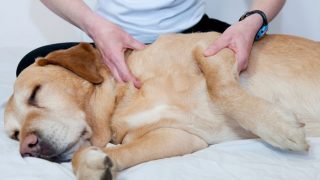
Rehabilitation

The role of exercise and physical modalities in the treatment of osteoarthritis.

Summary:

Physical rehabilitation is a valuable and often underutilized part of the overall management of small animals with OA. A team consisting of the veterinarian, physical therapist, veterinary technician, and owner is vital to determine and carry out an appropriate therapeutic regimen.

Conclusion:

To maintain enthusiasm for the program, measurements should be regularly obtained to document progress. In addition, controlled studies should be performed to determine the degree of improvement that may be expected with physical rehabilitationprograms.

Author & Journal:Millis DL, et al, Vet Clin North Am Small Anim Pract 27(4):913-930, 1997

Kinematic analysis of the hind limb during swimming and walking in healthy dogs and dogs with surgically corrected cranial cruciate ligament rupture.

Summary:

To determine hip, stifle, and tarsal joint ranges of motion (ROM) and angular velocities during swimming and walking in healthy dogs and dogs with surgically corrected cranial cruciate ligament (CCL) rupture.

Conclusion:

Results suggested that following surgical management of a ruptured CCL in dogs, swimming resulted in greater ROM of the stifle and tarsal joints than did walking. This suggests that if ROM is a factor in the rate or extent of return to function in these dogs, then aquatic rehabilitation would likely result in a better overall outcome than walking alone.

Author & Journal:Marsolais GS, et al, J Am Vet Med Assoc 222(6):739-743, 2003

Effect of Pulsing in Low-Level Light Therapy

Summary:

Low level light (or laser) therapy (LLLT) is a rapidly growing modality used in physical therapy, chiropractic, sports medicine and increasingly in mainstream medicine. LLLT is used to increase wound healing and tissue regeneration, to relieve pain and inflammation, to prevent tissue death, to mitigate degeneration in many neurological indications. While some agreement has emerged on the best wavelengths of light and a range of acceptable dosages to be used (irradiance and fluence), there is no agreement on whether continuous wave or pulsed light is best and on what factors govern the pulse parameters to be chosen.

Conclusion:

There is some evidence that pulsed light does have effects that are different from those of continuous wave light. However further work is needed to define these effects for different disease conditions and pulse structures.

Author & Journal:Hashmi JT, et al, Lasers Surg Med 2010;42:450-466

Extracorporeal shock wave therapy improves short-term limb use after canine tibial plateau leveling osteotomy

Summary:

To determine the influence of postoperative extracorporeal shock wave therapy (ESWT) on hind limb use after tibial plateau leveling osteotomy (TPLO).

Conclusion:

CONCLUSION:
Weight bearing increased faster after TPLO in dogs treated with postoperative ESWT.

RESULTS: The PVF (5.5 ± 1.0 N/kg, mean ± SD) and VI (0.67 ± 0.14 N-s/kg) of surgically treated limbs in the ESWT cohort were higher 8 weeks after surgery compared with preoperative (3.8 ± 1.1 N/kg, P < .0001 and 0.47 ± 0.21 N-s/kg, P = .0012, respectively) values. In the control cohort, PVF (2.9 ± 1.3 N/kg, P = .0001) and VI (0.33 ± 0.20 N-s/kg, P = .0003) 2 weeks after surgery and VI (0.42 ± 0.2 N-s/kg, P = .0012) 8 weeks after surgery were lower (4.59 ± 2.33 N/kg and 0.592 ± 0.35 N-s/kg, respectively) than before surgery. Other parameters did not differ between groups.

Author & Journal:Barnes, Kate et al, Vet Surg. 2019 Aug 30. doi: 10.1111/vsu.13320

Extracorporeal shock wave therapy in the treatment of chronic tendinopathies.

Summary:

Many clinical trials have evaluated the use of extracorporeal shock wave therapy for treating patients with chronic tendinosis of the supraspinatus, lateral epicondylitis, and plantar fasciitis. Although extracorporeal shock wave therapy has been reported to be effective in some trials, in others it was no more effective than placebo. The multiple variables associated with this therapy, such as the amount of energy delivered, the method of focusing the shock waves, frequency and timing of delivery, and whether or not anesthetics are used, makes comparing clinical trials difficult. Calcific tendinosis of the supraspinatus and plantar fasciitis have been successfully managed with extracorporeal shock wave therapy when nonsurgical management has failed.

Conclusion:

Results have been mixed in the management of lateral epicondylitis, however, and this therapy has not been effective in managing noncalcific tendinosis of the supraspinatus. Extracorporeal shock wave therapy has consistently been more effective with patient feedback, which enables directing the shock waves to the most painful area (clinical focusing), rather than with anatomic or image-guided focusing, which are used to direct the shock waveto an anatomic landmark or structure.

Author & Journal:Sems A, et al, J Am Acad Orthop Surg 14:195-204, 2006

Emerging modalities in veterinary rehabilitation.

Summary:

Many new modalities have been introduced in human and veterinary physical rehabilitation. In many instances, there is sound theory of how they may impact the physiology of various cells, tissues, or organs.

Conclusion:

This article reviews some of the modalities that have been introduced recently in human and veterinary rehabilitation. Topics include low-level laser, phototherapy, and extracorporeal shock wave treatment.

Author & Journal:Millis DL, et al, Vet Clin Small Anim 35:1335-1355, 2005

Kinematics of stair ascent in healthy dogs.

Summary:

The purpose of the study was to evaluate the kinematic characteristics of pelvic limb joints in orthopaedically normal dogsduring stair ascent.

Conclusion:

All joints of the pelvic limb undergo a greater joint motion to ascend stairs.

Author & Journal:Durant AM, et al, Vet Comp Orthop Traumatol 24(2):99-105, 2011

Low level laser therapy for tendinopathy: evidence of a dose-response pattern

Summary:

This review assessed the effects of low-level laser therapy (LLLT) on pain from tendinopathy. The authors concluded that LLLT can reduce pain in subacute and chronic tendinopathy if a valid treatment procedure and location-specific dose is used. Differences among the studies were not examined and only the short-term outcomes were assessed. The authors’ conclusions may not be reliable.

Conclusion:

Thirteen RCTs with sixteen treatment comparisons were included (n approximately 789).

Nine RCTs using optimal laser treatment dose and power density found that LLLT reduced pain in patients with sub-acute and chronic tendinopathy compared with control (WMD 32%, 95% CI: 23, 41).

Nine RCTs using optimal laser treatment dose and power density and 4 RCTs not using optimal treatment parameters found that LLLT reduced pain compared with control (WMD 22%, 95% CI: 5.9, 36.1). There was a statistically significant difference between RCTs using optimal laser treatment dose and power density and those RCTs not using optimal treatment parameters (P<0.001).

The funnel plots suggested there was potential for some publication bias.

Author & Journal:Bjordal JM, et al, Phys Therapy Rev 2001;6:91-99