
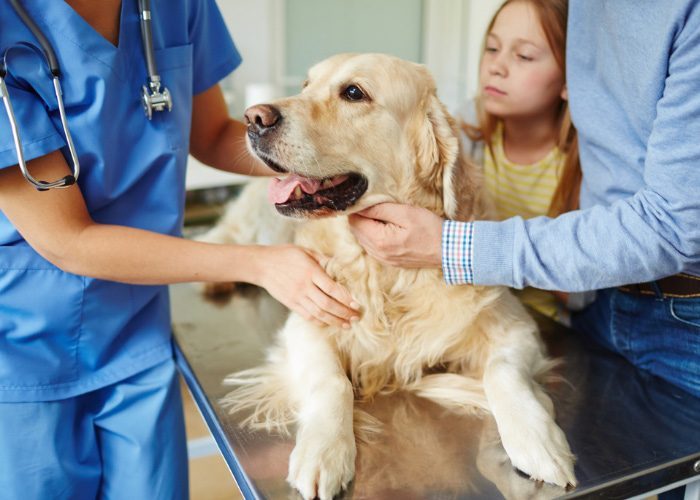
The first step in an orthopedic exam is taking a thorough history from the dog owner. You may wish to interview the client yourself or have a technician or assistant gather the history. Alternatively, you can utilize this intake form to collect a comprehensive orthopedic history.
Feel free to brand this form with your own clinic details. You can also add and delete questions as you see fit. The key is to be thorough, but it is completely customizable!
Here is how we recommend using and interpreting the CARE Orthopedic History Form. For more details, click here for the COMPREHENSIVE ORTHOPEDIC EXAM.
SIGNALMENT
The patient’s breed and age should be considered in the development of a differential diagnosis list.
Remember the known risk factors for developing OA:
- Breed
- Age > 8 years
- Overweight or obese
- Spayed/ neutered (Read more about the link between gonadectomy and orthopedic disease)
- Working dog or canine athlete
PART 1: Presenting Complaint
What is the presenting complaint?
This question gives the client the opportunity to tell you what they are concerned about. You will get answers ranging from one word to paragraphs running onto the back of the page! Many clients may not recognize signs of chronic pain and think that “slowing down” is a sign of age. It will be up to you to educate them on your exam findings as they relate to managing the dog’s pain and mobility. Sometimes the presenting complaint is spot-on, such as “left hind limb lameness.”
How long has this been going on?
“This” refers to the presenting complaint. This question is often much harder for clients to answer than it might seem, particularly for waxing and waning, chronic lameness. Look for answers such as days, weeks, months or years rather than specific dates or time frames. OA is most commonly a chronic condition with intermittent episodes of more pronounced lameness or functional limitations.
Was there a history of trauma or inciting cause?
A clear history of severe trauma and acute, non-weight bearing lameness suggest a condition other than OA. However, many dogs may be asymptomatic for OA, or have waxing and waning mild signs that get significantly worse following a specific incident (such as a trip to the dog park or that pesky squirrel).
Has your dog ever had joint trauma or surgery?
Remember, these are predisposing factors for developing OA. (Read our OA Overview here for more)
Are symptoms/ mobility concerns getting better/ worse/ staying the same?
Typically, OA symptoms wax and wane but gradually get worse over months to years. Soft tissue injuries such as sprains and strains often get better with rest but may recur with increased activity. Acute, mild traumatic injuries may resolve with rest.
Have you noticed any of the following:
This question is asking about the dog’s functional limitations and general health history. Changes in functional mobility are associated with chronic pain and OA. General health questions are important to include, particularly when examining senior and geriatric dogs.
- Change in sleeping habits (sleeps more/ is restless/ can’t get comfortable)
- Change in sleep habits may be a sign of chronic pain or can be a sign of canine cognitive dysfunction.
- Change in elimination habits (change in posture to urinate/defecate/ accidents in the house)
- Many dogs with pelvic limb lameness and weakness are not able to posture, particularly to defecate as this action requires substantial eccentric limb strength and core strength. Some clients may believe their dog to be incontinent whereas the dog simply cannot maintain the posture to defecate. Male dogs may also change urination posture with pelvic limb lameness.
- Change in behavior (more reclusive/ new aggression towards people or other dogs)
- Changes in behavior are one of the primary indicators of chronic pain. Even young dogs with hip or elbow dysplasia may become protective or aggressive if they are in discomfort. Client metrology instruments may help identify changes in behavior that suggest chronic pain.
- Difficulty lying down
- Moving from a standing to down position requires controlled, eccentric strength in all limbs and many dogs with OA will have difficulty or be reluctant to lay down. If they have trouble standing up from a down, they may also be reluctant to lay down as they know how hard it will be to stand back up.
- Difficulty getting up
- This is a common complaint from clients with dogs with pelvic limb orthopedic or neurologic disease. You may also ask if there is a difference in getting up based on the surface the dog is laying on (carpet vs. hardwood).
- Difficulty jumping UP (in the car/ on the bed/ on the couch)
- This typically indicates weakness or pain in the pelvic limbs.
- Difficulty going UP stairs
- This typically indicates weakness or pain in the pelvic limbs, though dogs with elbow OA may also be reluctant to climb stairs.
- Difficulty going DOWN stairs
- Going downstairs shifts weight to the thoracic limbs and can be painful and challenging for dogs with elbow, shoulder and carpal disorders. Spinal and brachial plexus lesions will also commonly cause reluctance to go downstairs.
- Change in tail position/ wagging (holds tail lower)
- A change in tail position may indicate lumbosacral pain/ disorder and examination of the spine and pelvis is indicated along with neurologic screening.
- “Limp tail” or “swimmer’s tail” is an acute myopathy of the coccygeal muscles and typically affects middle-aged, medium to large breed, active dogs and is characterized by the tail drooping. These dogs typically do not want to sit and may seem reluctant to play or have decreased energy due to discomfort. This condition is acutely painful but is typically self-limiting and responds to NSAIDs and rest (+/- laser therapy).
- Change in appetite (indicate if INCREASED or DECREASED)
- Decreased appetite may be a sign of systemic illness and warrants a thorough physical examination. Dogs with chronic pain can have a decreased appetite. If the dog is receiving cox-inhibiting NSAIDs and there is a change in appetite, this may be a sign of impending gastric ulceration and the NSAID should be stopped immediately (Read more about NSAIDs). If the dog is not receiving adequate pain management and has decreased appetite, this symptom may be due to pain or discomfort moving to, and standing at, the food bowl.
- Increased appetite may be noted if the dog is on a calorie restriction weight loss plan. See HERE for tips on keeping dogs filling satisfied when cutting calories.
- Vomiting or Diarrhea
- The patient should have a thorough physical examination and questioned for dietary indiscretion or other causes of vomiting and diarrhea.
- If the dog is taking cox-inhibiting NSAIDs, the drugs should be stopped and alternative pain relief provided as well as symptomatic treatment. Mild, self-limiting vomiting and diarrhea have been described in dogs taking piprant NSAIDs (Galliprant), and as long as the dog is otherwise acting normal and eating and drinking, the label for this product does not suggest stopping the medication. However, some dogs may have more severe gastric upset with Galliprant and not tolerate the product.
- Coughing, sneezing, straining to urinate or defecate
- It is important to obtain a thorough medical history.
- Change in the sound of the bark
- Changes in tone/ sound of bark is a common symptom of geriatric onset laryngeal paralysis and polyneuropathy (aka GOLPP). Labrador Retrievers are commonly effected by GOLPP as they age. Laryngeal paralysis is a potentially life-threatening condition and will limit the dog’s ability to exercise, particularly in warm weather. A component of GOLPP is progressive polyneuropathy that will lead to muscle atrophy (particularly the temporal and cranial tibial muscles) and weakness. Senior and geriatric dogs can commonly be affected by both GOLPP and OA.
- Gagging/ wheezing/ honking sounds
- These are symptoms of respiratory or pharyngeal disorders and should be identified and worked up appropriately concurrent with addressing OA and chronic pain.
- Any new lumps or bumps that are growing quickly
- This question would be part of a general physical examination but is also important to include when evaluating dogs for orthopedic disease. Tumors in the axilla and inguinal region may affect mobility, particularly when large. Intramuscular lipomas may also lead to gait changes or pain and would appear as a swollen limb. Other cutaneous and subcutaneous masses should also be evaluated, particularly if you plan to incorporate laser therapy into a treatment plan and the mass is within the field of treatment.
PART 2: Activities of Daily Living
These questions are very important in order to understand the dog’s home environment and lifestyle. Activity modification and environmental adaptations may be part of your customized treatment plan.
PART 3: Response to Rest/ Activity
Animals with OA can show stiffness and lameness after long periods of rest (first thing in the morning) and may work out of the lameness over the course of the day. Alternatively, some dogs with OA and those with soft-tissue related orthopedic disease may only show lameness after activity.
PART 4: Response to Treatment
It is important to ask the client if they have tried giving medications, even if they admit to giving ones that you have not prescribed (ie, aspirin). Lameness/ mobility typically improves with NSAIDs (or aspirin) administration, often after a single dose, though continued improvement is generally seen following repeated doses up to 4 weeks or more.
Other treatments such as joint supplements, omega 3 fatty acids, and Adequan are not expected to result in immediate improvement and generally take weeks to months for full effects. (Read more about long-term management)
Rehabilitation/ hydrotherapy typically helps dogs with OA but may take weeks to see the full effect.
Some surgeries are expected to result in excellent results and resolution of OA symptoms (e.g., total hip replacement, shoulder OCD), whereas other surgeries may not alter the long term course of the condition and continued lameness is expected (tarsal OCD, elbow arthroscopy).
PART 5: Current Medications and Supplements
Be sure to ask the client what they are currently giving their pet and/or how long ago medications were last administered. Ask about all supplements and if possible, look at the ingredients on the label if you did not prescribe the supplement yourself. Also, ask about any known allergies or previous reactions to medications.
PART 6: Diet and Nutrition
Weight management is the single most important tool in managing the progression and symptoms of OA in dogs. Obesity is a disease and it is our obligation as veterinarians to discuss and treat this condition, as challenging as the conversation may be at times.
If a dog is overweight or obese (which over 50% of dogs are), you will need to make specific dietary recommendations, including the type and amount of food and treats the dog should eat to lose weight. (Read more about weight loss)
To start, you will need to know exactly what and how much food and treats the dog is eating. Let the client know that it is OK if they give treats or table scraps, you just want to know all of the sources of calories (if you make them feel bad for this, they won’t tell you all of the sources of calories and the dog won’t lose weight).
It will be important to return to this section and discuss in more detail to make sure the client is disclosing all sources of calories. Bully sticks and greenies have calories!
PART 7: Other Medical History
If you are this patient’s primary care veterinarian, you will likely have a record of all of the dog’s medical and surgical history, in which case you may not need to ask this question.
However, if this is a new patient, it is very important to know their medical and surgical history.
Remember, prior joint surgery/ trauma can lead to OA, and there may be a link between early (<6 months) spay/ neuter and OA in certain breeds, including Labrador Retrievers (Read more about the effects of gonadectomy). Also, dogs can develop immune-mediated arthritis due to systemic diseases such as tick-borne disease, neoplasia, and chronic infections.
PART 8: Goals and PART 9: Realistic Expectations
This question is very important when it comes to developing a customized treatment plan for this dog. Most clients will answer “I just want my dog to be comfortable.” This is truly the best possible answer as it empowers you to make comprehensive recommendations to manage the dog’s pain.
But other clients will have specific goals or expectations, particularly if they are presenting with a puppy with potential DOD and eventual OA. These clients may have hoped to adopt a dog that would live an active lifestyle with them or participate in certain events such as agility. You will need to counsel these clients on activity recommendations if you establish a diagnosis of DOD. (Read more about activity recommendations).