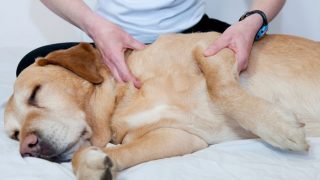
Rehabilitation

Inhibitory effect of low-level laser irradiation on LPS-stimulated prostaglandin E2 production and cyclooxygenase-2 in human gingival fibroblasts.

Summary:

It has been reported that lipopolysaccharide (LPS) from periodontal pathogens can penetrate gingival tissues and stimulate the production of prostaglandin E2 (PGE2), which is known as a potent stimulator of inflammation and bone resorption. Although biostimulatory effects of low-level laser irradiation such as anti-inflammatory results have been reported, the physiological mechanism is not yet clarified. The purpose of the present study was to determine the effect of laser irradiation on PGE2 production and cyclooxygenase (COX)-1 and COX-2 gene expression in LPS-challenged human gingival fibroblast (hGF) cells in vitro.

Conclusion:

In conclusion, low-level laser irradiation inhibited PGE2 by LPS in hGF cells through a reduction of COX-2 mRNA level. The findings suggest that low-level laser irradiation may be of therapeutic benefit against the aggravation of gingivitis and periodontitis by bacterial infection.

Author & Journal:Sakurai Y, et al, Eur J Oral Sci 2000;108: 29-34

A Pilot Clinical Study Assessing Treatment of Canine Hip Dysplasia Using Autologous Protein Solution.

Summary:

Five dogs with bilateral hip dysplasia and without osteoarthritis of other joints were enrolled in this pilot study. Objective kinetic data using a pressure sensitive mat and owner assessments using the canine brief pain inventory (CBPI) and Liverpool Osteoarthritis for Dogs (LOAD) questionnaires were obtained prior to treatment. Enrolled dogs were treated in one hip with autologous protein solution(APS) and the contralateral hip was injected with an equal volume of saline. The hip to be treated was selected using a random number generator. At exactly 28 days following treatment dogs were re-assessed using the pressure sensitive mat and the CBPI and LOAD questionnaires. No dogs were treated with any other medications or supplements throughout the study period.

Conclusion:

Assessment of the total pressure index (TPI) collected using the pressure sensitive mat showed that the hips treated with APS improved significantly more than hips treated with saline (p = 0.0005) and that the hips treated with APS bore significantly more weight than the hips treated with saline at day 28 (p < 0.05). Statistically significant improvement was noted by owners in “pain” and “function” as assessed by the CBPI as well “mobility at exercise” using the LOAD questionnaire. This pilot study provided proof of principle that APS is beneficial in treating pain and lameness in dogs affected by coxofemoral osteoarthritis.

Author & Journal:Frank, S.P., Front Vet Sci. 2019 Aug 9;6:243. doi: 10.3389/fvets.2019.00243. eCollection 2019

Assessment of the effects of diet and physical rehabilitation on radiographic findings and markers of synovial inflammation in dogs following tibial plateau leveling osteotomy

Summary:

To determine the effects of an omega-3 fatty acid and protein-enriched diet, physical rehabilitation, or both on radiographicfindings and markers of synovial inflammation in dogs following tibial plateau leveling osteotomy and arthroscopic surgery for treatment of cranial cruciate ligament disease. DESIGN Randomized, prospective clinical trial. ANIMALS 48 dogs with unilateral cranial cruciate ligament disease.

Conclusion:

Results suggested that feeding the TF can result in lower synovial fluid PGE2 concentrations and that both the TF and rehabilitation can reduce progression of osteoarthritis in the 6 months following tibial plateau leveling osteotomy; clinical relevance of slower osteotomy healing in dogs fed the TF was unclear.

Author & Journal:Verpaalen VD, et al, J Am Vet Med Assoc 252:701-709, 2018

The effect of shock wave therapy on patellar ligament desmitis after tibial plateau leveling osteotomy.

Summary:

To determine if shock wave therapy (SWT) after tibial plateau leveling osteotomy (TPLO) has a beneficial effect on patellar ligament inflammation assessed by thickening of the ligament and ligament fiber disruption.

Conclusion:

Based on these results, SWT decreases the radiographic signs of patellar ligament desmitis.

Author & Journal:Gallagher A, et al, Vet Surg 41(4):482-485, 2012

The effect of ice on intra-articular temperature in the knee of the dog.

Summary:

The effect of surface cooling on intra-articular temperature was examined in dogs’ knees.

Conclusion:

We conclude that brief periods of topical cold application to a dog’s knee can induce significant and long lasting depression of intra-articular temperatures and that this is a local effect not dependent on core temperature cooling.

Author & Journal:Bocobo C, et al, Am J Phys Med Rehabil 70(4):181-185, 1991

Effect of moderate treadmill exercise on some physiological parameters in untrained Beagle dogs.

Summary:

The aim of the present study was to evaluate the modifications of some physiological parameters during moderate treadmill exercise in seven healthy Beagle dogs.

Conclusion:

Considering these significant variations, the knowledge of RT, HR, glucose and lactate concentrations, RBC, and Hct, the most suitable and sensitive indicators of response to treadmill exercise in untrained dogs, is essential in order to evidence the individual levels of exercise tolerance, to investigate exercise-related problems and to design specific and individual treadmill protocols.

Author & Journal:Piccione G, et al, Exp Anim 61(5):511-512, 2012