
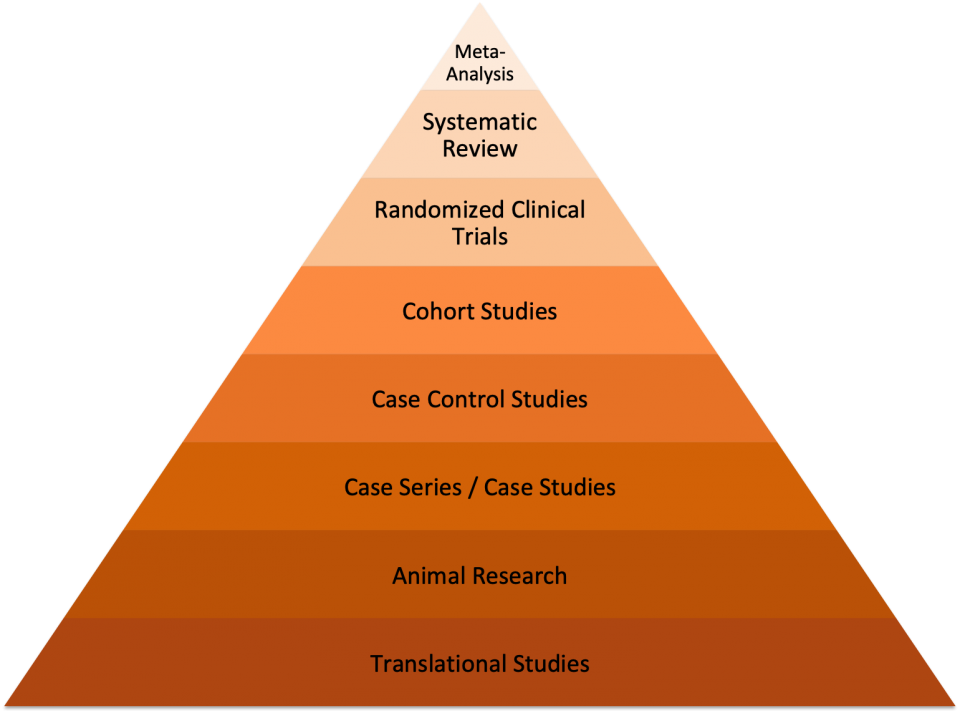
The practice of evidence-based medicine (EBM) can be described as the effort to make medical decisions based on the strongest scientific evidence available. Evidence can be categorized into hierarchal levels according to the quality of research and the likelihood that additional studies would contradict the conclusions drawn.
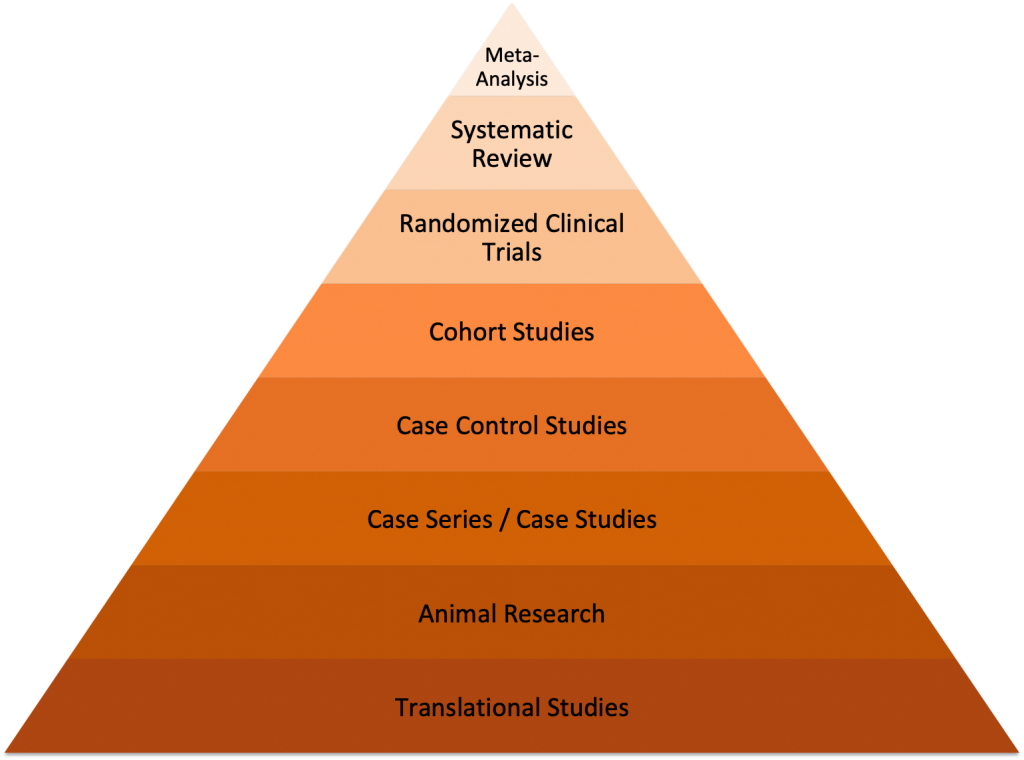
Several ranking systems have been proposed to catalog research studies based on the study design. In each system, the highest level of evidence comes from a meta-analysis, systematic reviews, and well-designed randomized clinical trials. The lowest level of evidence comes from expert opinion based on extrapolation from experimental research or physiologic reasoning (“first principles”). Case reports, case series, and cohort studies fall within the mid-range of levels of evidence.
In veterinary medicine, we have a paucity of high-level evidence and most clinical decisions are made based on experience, basic science concepts or translational research. Observational studies, including cohort and case-control designs, can offer valuable data. However, even these types of studies are infrequent in veterinary literature.
It is important to note that extrapolation of results from one or two studies to represent an entire topic or clinical question is inappropriate. For example, the results of research using one therapeutic laser protocol should not be extrapolated to represent all laser protocols, whether these results are positive or negative. The results are specific to the particular disease or model being tested and the laser parameters used in the study. Likewise, if a particular post-operative rehabilitation protocol is successful in improving recovery, this does not necessarily mean that any or all post-operative rehabilitation protocols would achieve the same outcome.
While it may sound ideal to have high quality, randomized, placebo-controlled studies to support each treatment decision we make, this is unlikely to ever occur. In many instances, the conduction of randomized, placebo-controlled studies may be unethical.
This point was made by authors Smith and Pell in an article published in the British Medical Journal titled: Parachute use to prevent death and major trauma related to gravitational challenge: a systematic review of randomized controlled trials. The conclusion of this scientific article was that parachutes have not been subjected to randomized, placebo (i.e. no-parachute) clinical trials and that “everyone might benefit if the most radical protagonists of evidence-based medicine organized and participated in a double-blind, randomized, placebo-controlled, crossover trial of the parachute.”
While this is a tongue-in-cheek conclusion for a highly respected medical journal, it does highlight the point that just because we do not have high levels of evidence to support a treatment or procedure, it does not mean that the treatment or procedure is ineffective. If we were to only utilize therapies or techniques that have stood up to systematic reviews or meta-analysis, our veterinary medical toolbox would be virtually empty.
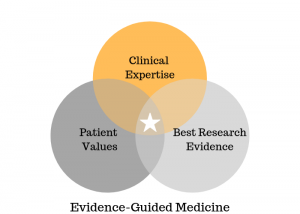
Thus, my personal philosophy is one of Evidence-Guided Medicine. Whenever possible, I make recommendations based on the best available evidence from research studies. When evidence is not available, I use sound clinical judgment and professional experience to guide treatment recommendations. I also consider clients’ personal values, experiences, and preferences when designing a customized treatment plan for my patients.
The treatment of osteoarthritis incorporates a wide range of therapeutic options (Read more about treatment options) with varying degrees of evidence to support each treatment. When designing a treatment plan using an evidence-based medicine approach, the plan should be built on the foundation of weight management and NSAIDs. A comprehensive plan will include many other treatment modalities, all with less evidence to support their efficacy in treating dogs with OA, but nonetheless important components of the plan. Your personal clinical experience, individual patient’s needs, and client’s values will direct you in making your evidence-guided clinical decisions.
1. Aragon CL, Budsberg SC. Applications of evidence-based medicine: Cranial cruciate ligament injury repair in the dog. Vet Surg 34:93-98, 2005.
2. Smith GCS and Pell JP. Parachute use to prevent death and major trauma related to gravitational challenge: systematic review of randomized controlled trials. BMJ 327:20-27, 2003.